The mistakes that gave birth to the Alpenbrevet Odyssey.
In 2013, I rode my first Alpenbrevet with my husband Alain and our good friends Chris and Heather. Alain was doing the Platinum route, a true sufferfest: 280 kilometres and 7,000 metres of climbing. The rest of us were a little more sensible. We had signed up for Gold: “only” 180 kilometres and 5,100 metres.
Heather had been dreaming about the Alpenbrevet for years and was finally on the start line. As for me, I’m still not entirely sure how I was convinced to take part, but I do remember being wildly excited. I had trained all summer, felt strong on the bike, and genuinely believed I was ready.
We joined the Brevet tour group, as Alain was guiding for them all week. Riding alongside us was a journalist, Heidi Swift, who would later immortalise my suffering in an article published in Peloton magazine. Even years later, it’s still a fun (and humbling) read.
Download the article here if it doesn’t appear belowThe article famously describes my “unravelling” on the Susten Pass. That part is true, but the story actually starts earlier.
A dream ride
Back in 2013, the Alpenbrevet didn’t start and finish in Andermatt as it does today. The start and finish were in Meiringen, and Andermatt served as a major refreshment stop after Gold riders had already conquered three significant passes: Grimsel, Nufenen, and Gotthard.
The region is breathtaking beyond words. Yes, the event is hard, but the beauty of the high Alps combined with the positive energy of thousands of riders make it magical. I count it amongst the best cycling events I’ve ever experienced.That day my legs felt great and my pacing was good. I was with my bestie, the weather was sublime, and by the third climb I remember thinking, This is hard, but I got this!
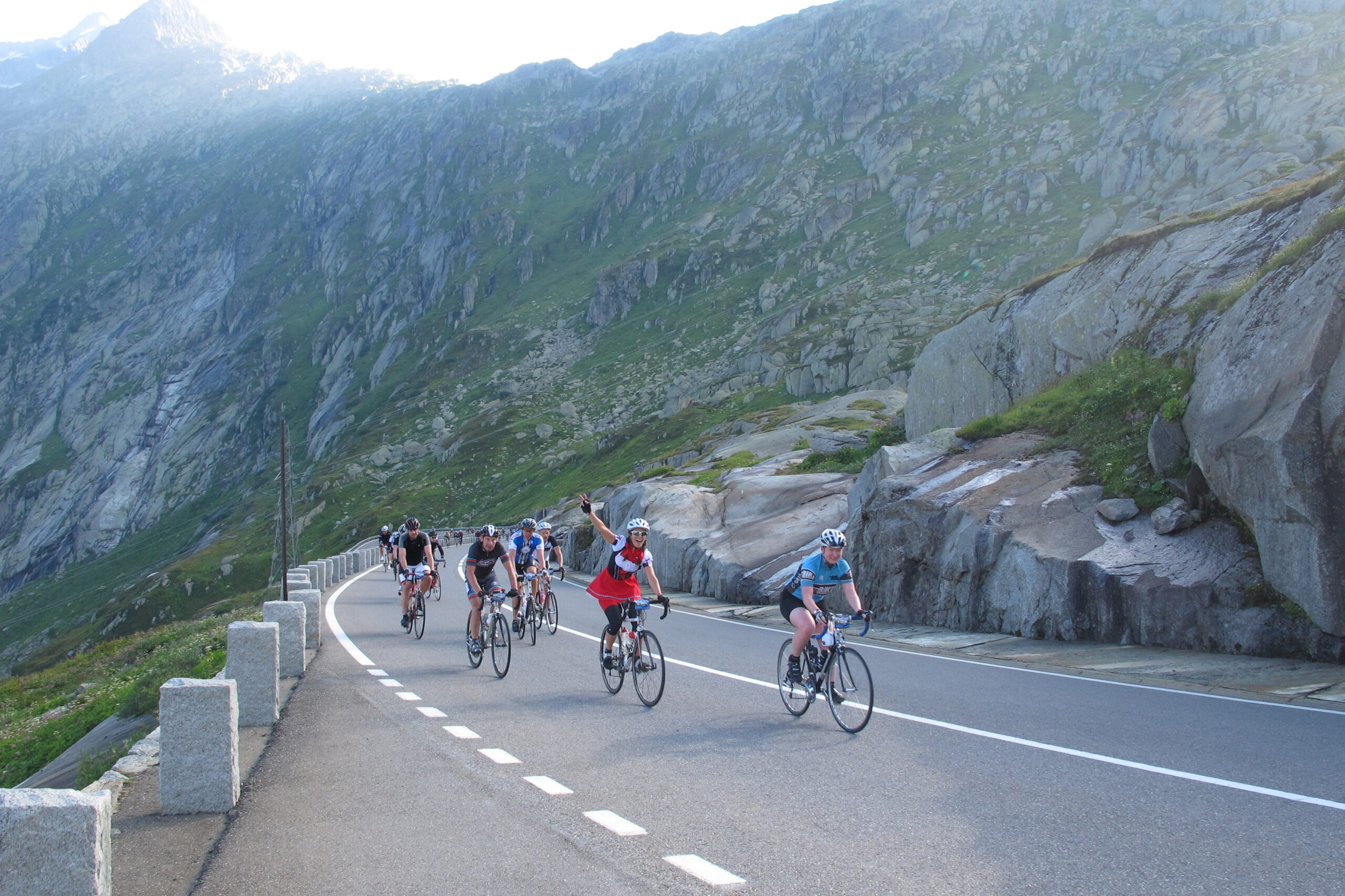
After a fast descent off the Gotthard, the road flattens into the valley before Andermatt and pedalling is required. And that’s when I felt it…a sharp, stabbing pain in my lower right abdomen at every pedal stroke.
I slowly rolled into Andermatt behind my friends in a bit of a panic. “Something’s wrong,” I blurted out. “I think I have to fart.”
Not my proudest moment. Thankfully Heidi didn’t publish this part!
I ran to the porta-loo and tried desperately to sort myself out. Ten minutes passed but little happened. Eventually, I gave up and found the others.
“You just missed Alain,” someone said casually. “He rode through while you were in the loo.”
Let that sink in. My husband had already ridden 280 kilometres and over 5,000 metres of climbing, and just passed me.
If you’re looking for a fast way to shatter confidence mid-event, that’s a good one.
“My stomach really hurts,” I said. “I can’t continue until this passes. I need to lie down.”
So I lay down on the ground in Andermatt and tried everything: legs in the air, belly massages, strange contortions that probably looked alarming to passers-by. Eventually, mercifully, I got some relief.
“Okay,” I said, standing up. “We can go. I’m good.”
We had lost about 40 minutes, but we still had plenty of time before the cutoff. Thank goodness for loving and patient friends.
I thought the worst was over. I was wrong.
“The unravelling” as Heidi so kindly describes it
That day in late summer 2013, I learned something important about myself: my body does not tolerate high sugar intake over long periods.
I had been following my husband’s nutrition strategy, eating what he ate at consistent intervals, before I was hungry. And it worked beautifully, until it didn’t. After eight hours of riding at relatively high intensity, my digestive system had had enough.
I had never ridden this long before at this intensity. And it never occurred to me that digestion could be the thing that would break me.
By Andermatt I was in trouble. It was impossible to eat. Even though the pain dulled, the damage was done.
Leaving Andermatt I felt inspired again. We dropped down this spectacular gorge toward Wassen and turned off the Gotthard road to begin the Susten climb. As we climbed out of the village through a short series of hairpins, I felt a flicker of excitement.
Only one climb left. And only 3 hours to beer!
My legs still felt good and my stomach pain was a distant memory. But then the road crested, and there it was, off in the distance…the Susten Pass.
Chris pointed ahead cheerfully. “The long straight begins. That’s where we’re going!”
I stared at what looked like a hairpin far off on the horizon.
All the way over there? That’s hours away. That’s too far. I’m never going to get there!
I had never ridden the Susten before. I didn’t know it was essentially a 15-kilometre straight line at around 7%, with only two switchbacks at the very end to break the monotony.
From one second to the next, something snapped. I went from a happy climber to someone who could not, mentally or physically, continue. I lost my will to ride my bike.
I dropped off the group. I slowed to a crawl until I just stopped. I threw myself into the grass in frustration. At that point, I only wanted one thing: to stop. The Susten broke me.
Lying in the grass
I lay there watching riders pass by. None of them looked particularly happy either. Some gave me sympathetic looks. A few did double takes when they realised I was wearing a dress. A handful asked if I needed help.
“No,” I said. “I’m fine. I just need a break.”
Eventually, I convinced myself to eat the cheese sandwich I hadn’t been able to touch in Andermatt. Logic prevailed: If you want to get over the pass, you have to eat.
I sat there for twenty minutes contemplating the meaning of life.
Why am I here? What am I doing this for? Do I even like cycling? I love climbing, what happened?
Get back on the bike, Lillie. Get back on the #$*! bike! Just get over the pass and your suffering is over.
So I hop back on the bike with determination. Now I’m not riding because I like it, now I’m riding because, once I make it over the pass, I don’t have to ride anymore. Just over that tiny little pass is my opportunity to stop needing to ride. Just over there I can stop for good!
Finally, after the strongest mental exercises of my life, I reached the first switchback.
Only three kilometres left. Only 200 metres of climbing. Woohoo!!!
I flew up those final kilometers, overtaking riders who had overtaken me long before. Funny how something as simple as a switchback can bring back the love of riding in the mountains.
The Susten, a climb that normally would have taken me two hours, had taken three. Add the time lost in Andermatt, and we were nearly two hours behind schedule, all because of me. At the summit, I couldn’t even smile for the camera. I was frustrated, tired, and ready to go home.
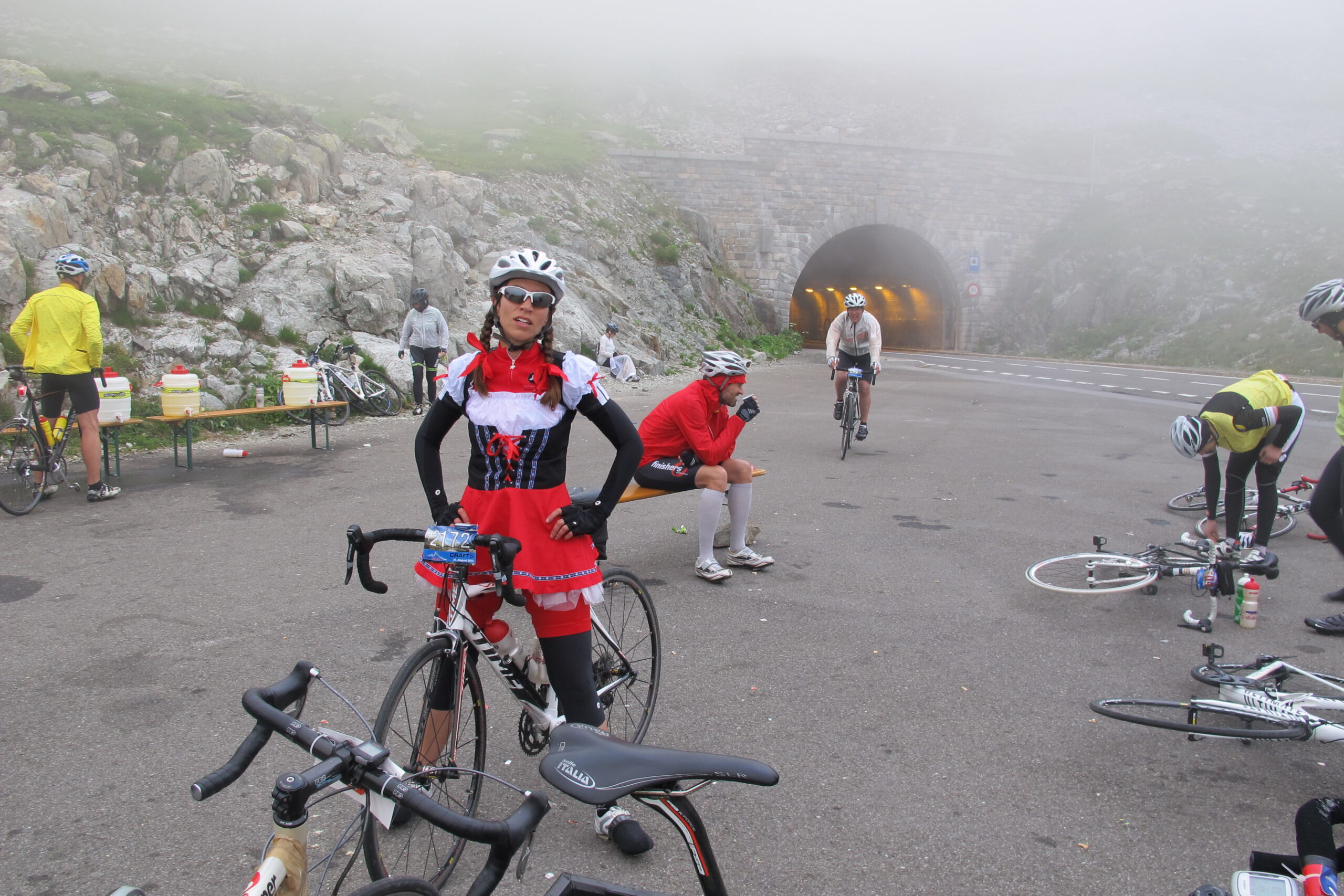
We didn’t linger. It was cold and windy at the top. I shoved food into my mouth and launched down the descent so fast I somehow logged a top-10 Strava time.
We rolled back into Meiringen together, crossed the line hand in hand, four abreast, thirteen hours after we started. I don’t think I was ever so happy to finish an event.
And I swore I would never do it again.
The lesson I didn’t know I needed
Looking back now, the mistakes are obvious. I was physically prepared for the Alpenbrevet. But I was not nutritionally or mentally prepared.
I thought training meant turning my legs enough times to accumulate 5,000 metres of climbing. I never imagined I needed to train my stomach. I didn’t understand how to vary food sources, balance sugar with fat and protein, or adapt nutrition as fatigue set in.
I also wasn’t prepared for mental fatigue: for the intrusive thoughts that can make even simple tasks feel overwhelming.
I didn’t fail that day, but I came very close.
Ten years and many long-distance events later, I’ve learned from my misery on the Susten. So yes, I’ll never do that again.
But I will ride the Alpenbrevet Gold again. And I can’t wait to share with my group all the things NOT to do so they never have to experience a “Susten”.
 using WordPress and