This article was originally published at cycliste.ch in French.
We often associate coaching with performance, results, and the idea that you always have to do more and better. Yet coaching can also serve another purpose. Learning to understand your body, recognizing how it reacts, and building training that actually fits your life, without becoming obsessed with numbers.
Lillie’s story lives in that space. By constantly putting her obligations ahead of her own needs, she slowly and unknowingly pushed past her physical limits. A diagnosis of an autoimmune hormonal disorder marked a breaking point, but also the beginning of a profound shift. With Amélie’s support, she learned to structure her training differently, to listen to sensations as much as data, and to put health and well being back at the center.
This story is as much about sport as it is about balance, priorities, and the slow process of learning to listen to yourself.
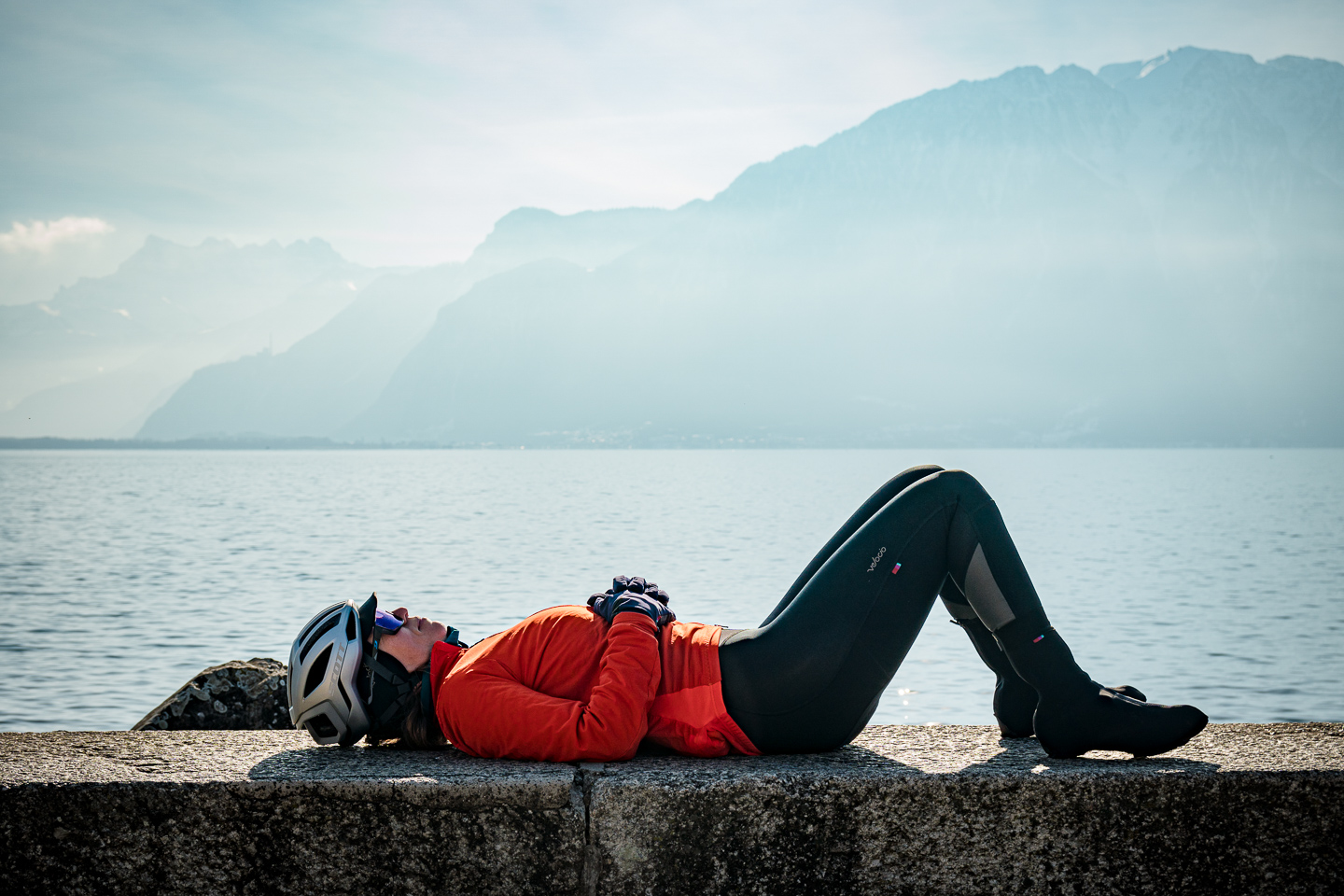
On October 1, 2024, my husband Alain drove me to the emergency room at Rennaz hospital. I had been struggling with insomnia since July, and even lying still, my heart rate regularly raced to 110 beats per minute. I could no longer manage even the simplest of tasks. All I wanted was to sleep… but my body refused.
Since August 2019, I have been dealing with serious health issues, as described in previous articles. Over time, I had slowly rebuilt a sense of physical and mental well being. And because I am motivated and ambitious, I kept pushing…sometimes too hard. The year 2024 made one thing very clear, I often cross my limits without realizing it.
And yet, the year had started well: new treatments, less pain, I was skiing again, and I had some awesome and ambitious cycling goals like Vollgummi, Dead Ends and Dolci, and Alpenbrevet Gold. Physically, everything seemed to be moving in the right direction.
SPORT AS A REWARD
But I have a bad habit: I put obligations before my needs. I treated training as a reward, not as a necessity. When work or family took over, training was the first thing to disappear. My sessions became improvised, squeezed in at the last minute, and often far too intense.
Like many people, I had absorbed the idea that my value depends on what I produce. Stress became normal. Rest felt like a luxury. And I ignored what my body was trying to tell me.
IGNORING THE WARNING SIGNS
Eventually, this lifestyle caught up with me. There I was, in the hospital, exhausted and terrified. I had already canceled Vollgummi and the Alpenbrevet. Dead Ends and Dolci was next. My cycling ambitions were disappearing and I knew I needed help.
Then the diagnosis came: Graves’ disease. An autoimmune condition that causes the thyroid to overproduce hormones causing: a racing heart, weight loss, anxiety, insomnia, and a constant feeling of running in overdrive. And like all my medical issues, it was most likely triggered by stress.
I had to admit what I had been avoiding for years: I do not recognize my limits. I see the world through rose colored glasses. I always imagine a happy ending, to the point of ignoring warning signs. I am so goal oriented that I become self destructive.
RESETTING MY PRIORITIES
Once I started taking medication to calm the thyroid hormone overproduction, life got better. But more importantly, I understood the message and finally reorganized my priorities. I learned to delegate, to organise my task list, and to put my needs first. One of those needs: rebuilding a reasonable level of fitness. But how, after trying so many different approaches that never worked?
At the end of October, I attended a PSWCC Ride and Talk event. Amélie from Test’N Perf spoke about coaching and about how heart rate can help us better understand our limits. And suddenly, it clicked. All summer long I had watched my heart rate steadily climb on my Garmin. And I watched my HRV collapse. I had ignored all the warning signs… until I landed in the emergency room.
So I approached Amélie and asked her humbly, “Can you help a forty-five year old woman with health limitations who just wants to stay fit without taking risks?”
She said yes.
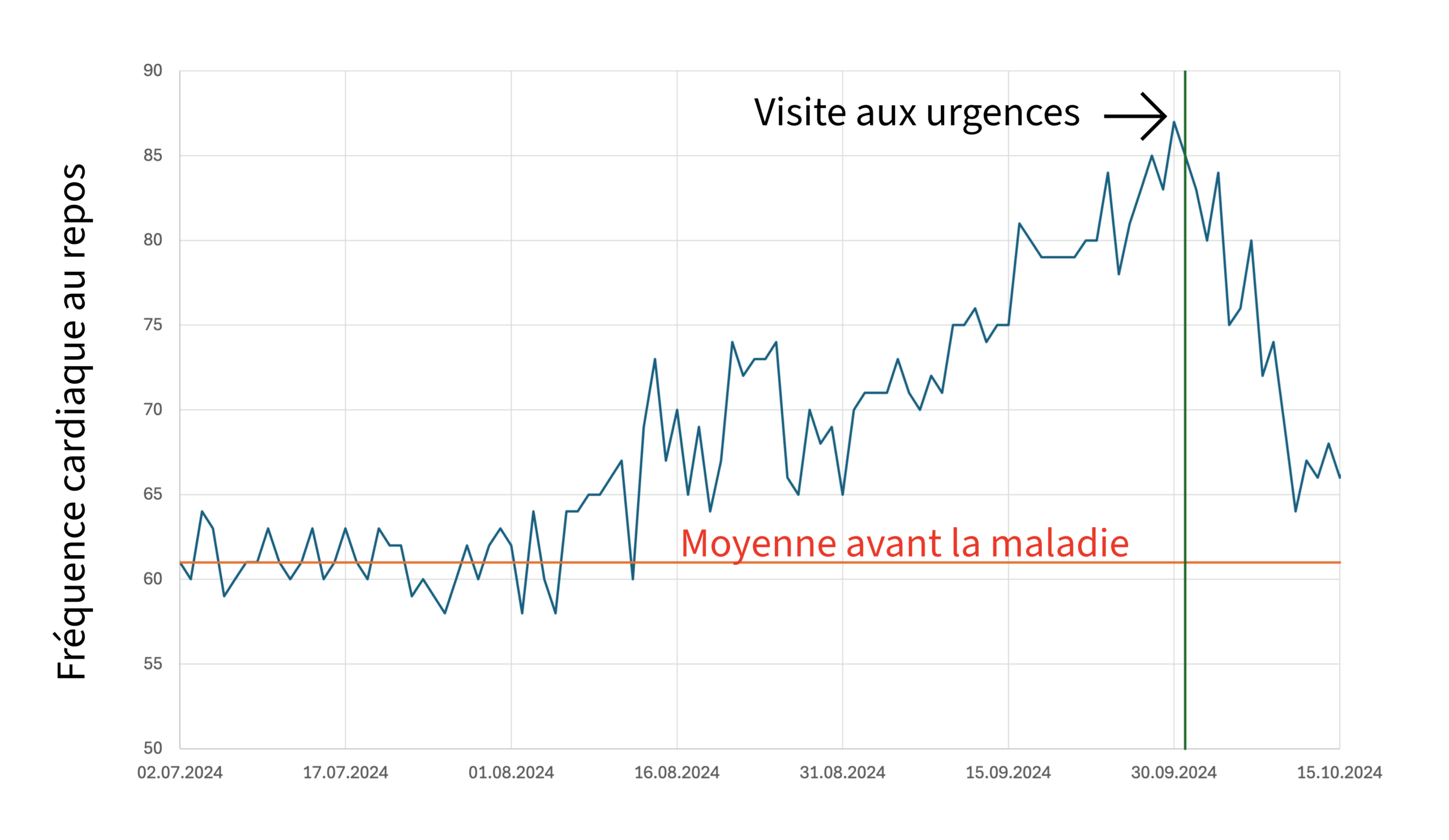
Garmin watch data showing my resting heart rate steadily climbing over 2 months
ACCOUNTABILITY CHANGES EVERYTHING
We built a simple plan: one structured session per week. Not three. Not four. One.
That is when I realized how little discipline I actually had. I had never followed my own plans for more than two weeks. But being accountable to someone else? Well, that most certainly worked. I would rather disappoint myself a thousand times than disappoint my coach. By putting her first, I finally put myself first.
Amélie asked for two hours of structured intensity per week. After years of believing that training meant long and exhausting rides, it almost sounded too easy. But I trusted her. And it worked.
I learned to understand my intensity zones and to respect them. I discovered that low intensity builds a base, regulates the nervous system, and improves recovery. I did not use a power meter: everything was based on heart rate and perceived effort. That forced me to truly listen to my body.
With just two hours of intensity per week, complemented by unstructured rides (of course), I suddenly had more energy during long guiding days with clients. My body recovered better. I knew when to push and when to slow down. And most importantly, I finally learned to recognize my warning signs.
We adjusted the plan when needed. Amélie followed my progress on TrainingPeaks. And with only one session per week, but every single week, everything changed.
In 2025, I did not canceled a single ride due to illness. I didn’t necessarily reach my fitness level from before 2019, but I regained a consistency and strength I had not felt in years. I finished La Reine, 140 kilometers with 3000 meters of climbing, without feeling completely destroyed. I completed the UCI Granfondo Switzerland mediofondo one hour faster than the previous year, while spending fewer hours training on the bike.
WHY DIDN’T I GET A COACH SOONER?
My list of excuses was endless.
- Too expensive
- I’m not racing
- I’m not an athlete.
- I don’t want/need to be stronger
- I have been riding for twenty-five years and I know what I am doing
But my health issues forced me to face the truth: my poor priority management was destroying my well being. As a mother, wife, worker, volunteer, and active human being, I had convinced myself that my needs were less important than other’s.
All those excuses placed me last. Today, my health comes first. Everything else can wait. Because if I am not healthy, nothing works.
By seriously committing to two hours of training per week and accepting help from someone who understood my body better than I did, I finally experienced a sustainable and successful cycling season.
KEEPING THE MOMENTUM THROUGH WINTER
When I moved from San Diego to Switzerland in 2009, winter was a shock. Yes, you can ride all year long here, but it is not necessarily pleasant. So I learned to ski, run, and do yoga or Pilates when the weather is bad. In winter, I typically do everything except ride my bike.
I hate home trainers…I need to be outside. I don’t ride to stay fit: I stay fit to ride!!! To live all the adventures I imagine each year. In winter, other sports allow me to maintain that base while exercising outside.
In spring, I usually start the season in good shape thanks to all the skiing, running, and strength work. But once cycling season begins, I forget everything else. By the end of summer, I can ride ten hours without any problem, but I feel soft and mushy…weak in the core.
So the next step is to find balance all year long. Creating a winter plan that I can also maintain during the season. My goal is two structured sessions per week: one on the bike (yes even in winter, outdoors or on the trainer, Amélie convinced me), and one focused on strength and stability.
I do not know exactly what that will look like yet, but I trust Amélie to help me figure it out.
I will tell you how it goes in the spring.
And if you have questions about creating a plan that fits your life, talk to Amélie. An effort test is usually recommended: it will identify strengths and weaknesses in order to target and prioritize areas for improvement so you can train intelligently.

 using WordPress and